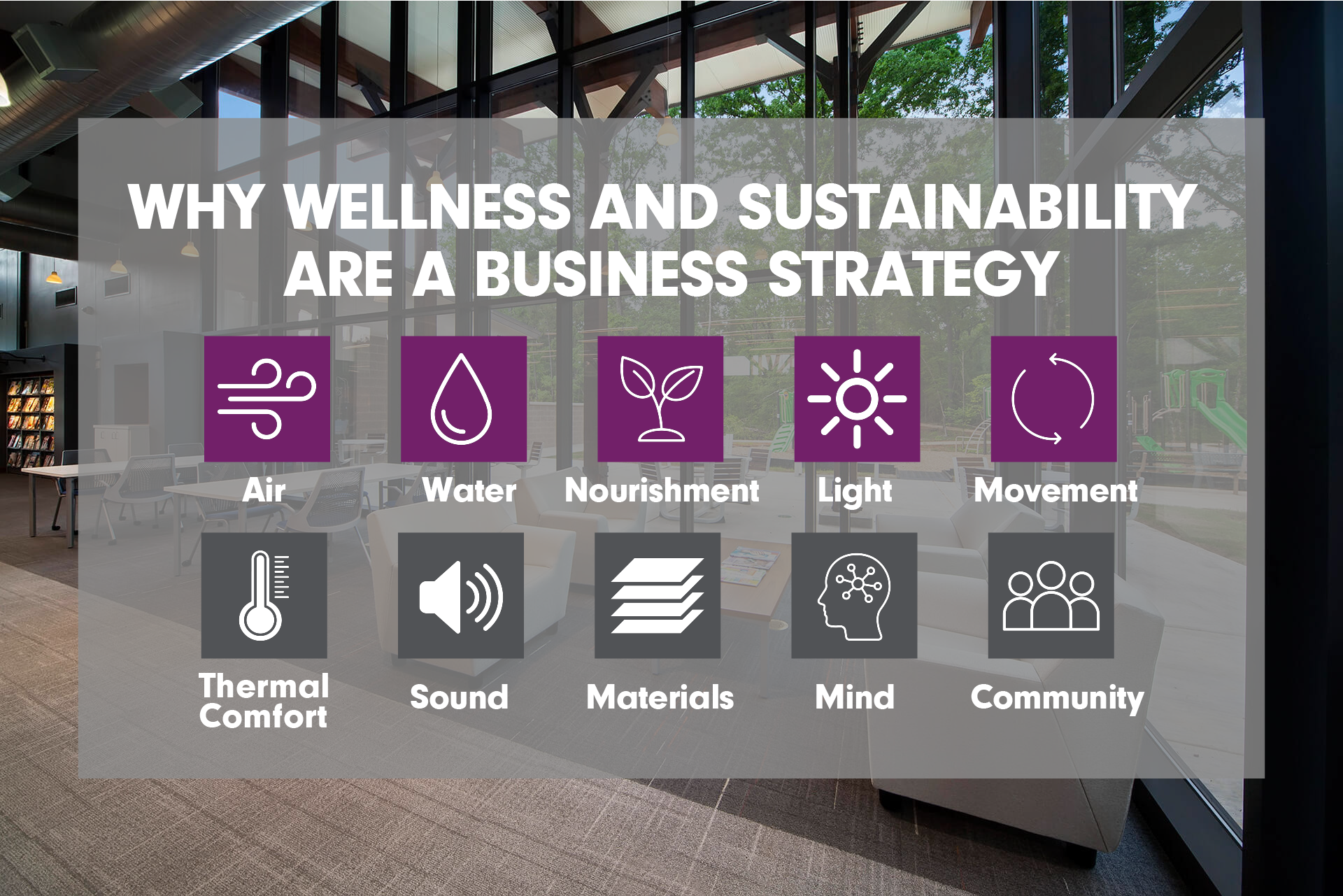
Why Wellness and Sustainability Are a Business Strategy

When wellness and sustainability come up in a capital project, they are often filed under the same mental category as compliance – necessary, well-intentioned, and fundamentally a cost. Something the organization does because it’s the right thing to do, or because a stakeholder is asking, rather than because it delivers a measurable return.

This framing misses what these decisions actually do. Wellness and sustainability, designed into a space intentionally, are levers that affect productivity, retention, operating costs, and how the organization is perceived by everyone who encounters it.


Beyond Materials and Certifications

Sustainability in commercial design is frequently reduced to material selection – specifying finishes that are recycled or responsibly sourced, and checking a box. That work matters, particularly given how much waste the construction industry generates. But it is just the surface of a much deeper approach.

A more complete view considers the impact of a space across three dimensions: the people who use it, the community around it, and the environment it sits within. The goal is not simply to reduce harm through better materials, but to design holistically for a space that actively benefits the people inside it while minimizing its footprint. This is what credentials like the WELL standard are built around – moving past the question of what a building is made of to the question of what a building does for the people who spend their days in it.

Not every project needs to pursue a formal certification. Certification is an undertaking, and it is not always the right fit. But the underlying discipline – designing with the health of users, the surrounding community, and the environment held in view from the start – is something that belongs in every project regardless of whether a plaque goes on the wall at the end.

The Business Returns Hiding in Plain Sight

The reason to treat this as strategy rather than cost is that the returns are significant, even when they are indirect. A space designed for human wellness – with attention to air quality, natural light, acoustics, and the physical experience of spending eight or more hours inside – affects how well people work. Employees in environments designed around their health are more present, more productive, and more likely to stay. In a market where retention and talent attraction are persistent challenges, the physical environment is a quiet but consistent factor in whether people want to be there.

Sustainability delivers a parallel set of returns. Energy-efficient systems reduce operating costs over the life of the building. Durable, responsibly chosen materials last longer and require less replacement. And increasingly, clients and employees notice whether an organization is doing its part and the work space has become part of how a company is judged by the people who matter to it.

Designing for Today and Tomorrow

The most valuable version of this thinking connects wellness and sustainability to the longer time horizon of the building itself. The right approach considers not just what a space needs today, but what tomorrow looks like – how the building can be designed so that future shifts have a lesser impact, so that the organization is planning for change it knows is coming rather than being caught by it. Designing for wellness and sustainability is part of that longer view. A space built to support its people and tread lightly on its environment is a space built to remain valuable as standards rise and expectations grow.

For executive leadership, the reframe is simply that these values are not expenses to be minimized. They are investments that pay back through the productivity of your people, the loyalty of your talent, the efficiency of your operations, and the impression you leave on everyone who walks through the door.

If you’re ready to view wellness and sustainability as a strategic business advantage rather than a line-item cost, reach out via our contact page to schedule an early planning discussion.
The Smart Way to Bring Design Trends Into a Commercial Space

Every few years, a set of design ideas takes hold across commercial interiors. Open plans. Then a retreat from open plans. Bold biophilic statements. Specific material palettes that suddenly appear everywhere. Some of these ideas are genuinely good, rooted in a real understanding of how people work. Others are simply of the moment, and will eventually read as dated the way any fashion eventually does.

Trends often reflect real shifts in how organizations operate, and ignoring them entirely produces spaces that feel frozen in time just as surely as chasing them produces spaces that feel disposable. The skill – and it is a skill – is knowing the difference between a trend worth building into the permanent structure of a space and one worth expressing in the elements you can easily change.

Where a Trend Lives Determines What It Costs

The most useful way to think about incorporating current design ideas is to consider where in the project they live, and therefore how expensive they are to reverse.

Some decisions are effectively permanent. Structural choices, major systems, the fundamental organization of a floor plate, high-cost finishes that are difficult to remove. When a fleeting trend gets built into these layers, the organization is locked into it for the life of the space. If it dates quickly, the only way to correct it is an expensive renovation.

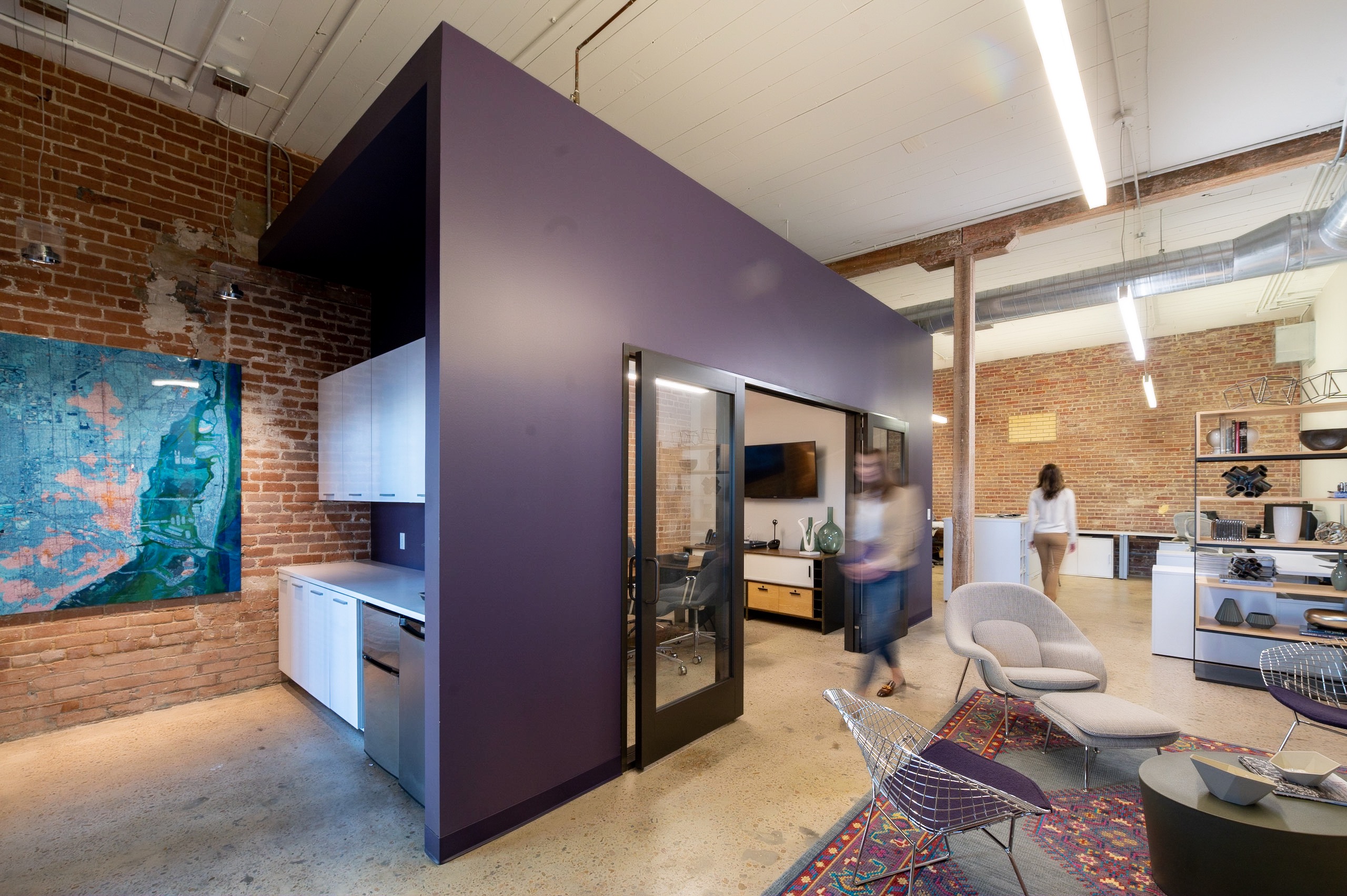
Other decisions are far more forgiving. Furniture, textiles, movable elements, paint, the layer of finishes that can be refreshed without touching the structure. This is where a current idea can be expressed freely, because if it fades, replacing it is straightforward and inexpensive.

A well-designed commercial space uses this distinction deliberately. The permanent layers are built on timeless principles – quality materials, sound spatial logic, choices that have proven they can stand the test of time. The changeable layers are where a space can reflect the present moment, absorb a trend, and evolve as tastes shift, all without compromising the long-term investment.

Learning from What Lasts

There is a reason certain design objects remain relevant decades after they were created. Classic furniture pieces that are still specified today have endured not because they were fashionable when they appeared, but because they combined quality materials with timeless thinking. They were designed to last, and they have.

This is the lens A2studio Architecture + Design brings to commercial interiors. The spaces we design have to perform for years, often more than a decade, and the decisions built into their permanent structure have to hold up over that entire span. That does not mean ignoring what is current. It means being intelligent about how the current gets incorporated – grounding the lasting elements in durability and considered design, while leaving room in the changeable elements to keep a space feeling contemporary as time passes.

Quality matters most where it is hardest to change while trends belong where they are easy to update.

The Investment Case

For executive leadership, this is fundamentally a question of protecting a capital investment while keeping a space relevant. A space that chases every trend into its permanent structure will need expensive correction the moment those trends pass. A space that refuses all contemporary influence will feel dated and rigid in a different way. The intelligent middle path – timeless where it counts, current where it is easy to refresh – produces a space that protects the investment and still feels alive years after it opens.

The goal is to be deliberate about trends. Build the bones to last. Let the surface evolve. That is how a commercial space stays both sound and current over the long life it is meant to serve.

If you’re thinking about building a commercial space that protects your capital investment while keeping it current and relevant, reach out via our contact page to schedule an early planning discussion.

DESIGN
WITH US

CONTACT US

Our team is ready to guide you through out every phase of your project.